The Galapagos giant tortoise is one of the most famous animals in the world. Known for its enormous size, heavy shell, slow movements, and remarkable lifespan, this reptile is an important part of the wildlife found on the Galapagos Islands of Ecuador. These islands are home to different giant tortoise species that have adapted to their local environments over millions of years.
Galapagos giant tortoises are more than just impressive animals. They help maintain the island ecosystems by eating vegetation, spreading seeds, and creating pathways through plants. Their history also tells an important story about evolution, human activity, and wildlife conservation.
Although these tortoises have survived for millions of years, many populations have faced serious threats from hunting, habitat damage, and introduced animals. Conservation programs have helped several populations recover, but continued protection remains important.
This guide covers everything you need to know about the Galapagos giant tortoise, including its physical characteristics, habitat, diet, behavior, reproduction, lifespan, evolutionary history, threats, and conservation.
Key Takeaways
- Galapagos giant tortoises are large reptiles native to the Galapagos Islands of Ecuador.
- They belong to the genus Chelonoidis, which includes multiple species.
- They can live for more than 100 years.
- Their diet consists mainly of grasses, leaves, fruits, and cactus pads.
- Domed and saddle-backed shells reflect adaptation to different habitats.
- They spend much of their time resting, feeding, and regulating their body temperature.
- They help ecosystems through seed dispersal, grazing, and nutrient cycling.
- Historical hunting and introduced species caused severe population declines.
- Captive breeding, habitat restoration, and reintroduction have helped several populations recover.
- Responsible wildlife tourism and continued conservation are essential for their future.
What Is a Galapagos Giant Tortoise?
The Galapagos giant tortoise is a large land-dwelling reptile native to the Galapagos Islands, an archipelago in the Pacific Ocean that belongs to Ecuador.
Its scientific classification belongs to the genus Chelonoidis. The name refers to several closely related giant tortoise species found across different islands and volcanic regions of the archipelago.
These tortoises are famous for their enormous size and long lives. They have thick, sturdy legs, a large shell, and a long neck that allows them to reach vegetation above the ground.
Galapagos giant tortoises are herbivores, meaning they eat plant material rather than other animals. Their diet includes grasses, leaves, fruits, and cactus pads, depending on the habitat and food available.
One of their most remarkable features is their ability to survive in environments where food and fresh water may be limited for long periods. Their slow metabolism helps them conserve energy during difficult conditions.
The Galapagos Islands were named after these animals. The Spanish word galápago was historically used for a type of saddle or tortoise shell, reflecting the unusual shape of some of the tortoises found there.
Physical Characteristics of the Galapagos Giant Tortoise
Galapagos giant tortoises have several physical features that help them survive in their island habitats.
1. Large Body Size
Galapagos giant tortoises are among the largest living tortoises on Earth. Large adults can weigh several hundred pounds, with some reaching around 250 kilograms or more. Exceptional individuals may be larger.
Their massive bodies help them store energy and survive periods when food is scarce.
2. Strong Legs
Their thick legs support their heavy bodies and help them move across rocky ground, grasslands, and uneven volcanic terrain.
Unlike aquatic turtles, giant tortoises are adapted to life on land. Their feet are sturdy and suited to walking rather than swimming.
3. Hard Protective Shell
The shell is one of the most recognizable features of a giant tortoise. It protects the animal’s body and contains a bony structure covered by a layer of keratin.
The shell is part of the tortoise’s skeleton and cannot be removed without seriously harming the animal.
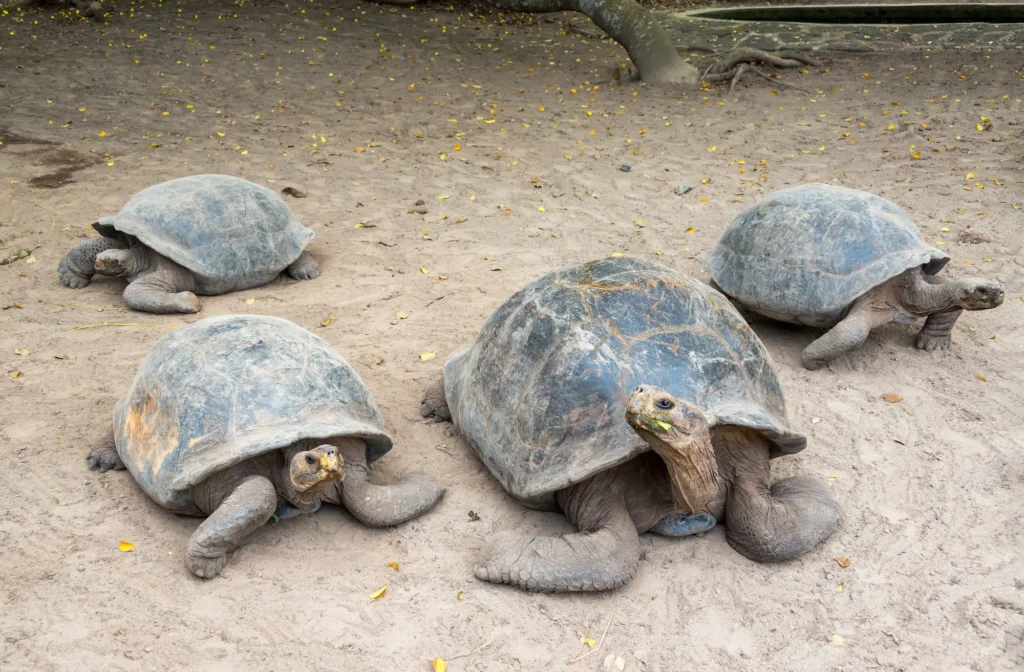
Shell shape differs between populations. Some tortoises have high, rounded shells, while others have a raised opening at the front that gives the shell a saddle-like appearance.
4. Long Neck
Their long neck allows them to reach leaves, grasses, and other vegetation. Saddle-backed tortoises can extend their heads upward to reach food that may be difficult for other tortoises to access.
5. Thick, Scaly Skin
Their skin is tough and covered with scales. The skin on their legs and neck helps protect them as they move through rough vegetation and dry environments.
6. Slow Movement
Giant tortoises generally move slowly because of their heavy bodies and energy-conserving lifestyle. However, they can travel considerable distances when searching for food, water, mates, or nesting areas.
Where Do Galapagos Giant Tortoises Live?
Galapagos giant tortoises live naturally in the Galapagos Islands, which lie roughly 1,000 kilometers west of mainland Ecuador.
The archipelago contains volcanic islands with different climates and landscapes. Some areas are dry and covered with shrubs and cactus, while higher elevations on larger islands support greener vegetation.
Giant tortoises occupy habitats such as:
- Dry lowlands with shrubs and cactus.
- Grasslands and open vegetation.
- Humid highland forests.
- Areas with seasonal water sources.
- Volcanic slopes and other natural landscapes.
The exact habitat depends on the species and island population.
Tortoises living in humid highlands often have access to abundant grasses and leafy vegetation. Those living in drier environments must cope with limited food and water during certain periods of the year.
This difference in habitat helps explain why giant tortoise populations developed different body sizes and shell shapes.
Giant tortoises do not naturally occur throughout the world. Their wild populations are associated with the Galapagos Islands, although other giant tortoises live in places such as the Seychelles.
Types of Galapagos Giant Tortoises
Galapagos giant tortoises are not all the same species. Different populations developed over time as tortoises adapted to the conditions on individual islands and volcanic regions.
The number of recognized species has changed as researchers have used genetic studies and other evidence to improve their understanding of tortoise evolution. Modern conservation sources recognize multiple distinct species, including several threatened species and some that are extinct.
Two major shell shapes are commonly used to describe Galapagos giant tortoises.
1. Domed-Shell Tortoises
Domed-shell tortoises have large, rounded shells without a prominent upward curve at the front.
They are commonly associated with wetter, higher-elevation habitats where grasses and other low-growing plants are available.
Their large bodies and rounded shells are well suited to environments with relatively abundant vegetation.
2. Saddle-Backed Tortoises
Saddle-backed tortoises have shells that curve upward at the front, allowing the neck and head to extend higher.
This shape is particularly useful in dry environments where food may be scattered or grow above the ground.
These tortoises can reach higher vegetation, including cactus pads and leaves on shrubs.
3. Intermediate Shell Forms
Some tortoise populations show shell shapes that fall between the two main types. Their physical characteristics reflect the environments and evolutionary histories of their populations.
Shell shape is useful for understanding adaptation, but it should not be used alone to identify every species.
Why Do Galapagos Giant Tortoises Have Different Shell Shapes?
The differences in shell shape are examples of adaptation and evolution.
The Galapagos Islands contain a range of environmental conditions. Food availability, rainfall, vegetation, and landscape differ from one island to another.
In dry environments, a saddle-backed shell can allow a tortoise to raise its head and reach higher plants. This can be an advantage when low-growing vegetation is limited.
In wetter environments, food is often more abundant near the ground. Domed-shell tortoises can feed on grasses and other plants without needing to stretch as high.
Over many generations, natural selection helped shape the characteristics of different populations.
These differences became especially important because the islands were separated by the ocean. Tortoise populations living on different islands had fewer opportunities to mix, allowing them to develop distinct characteristics.
What Do Galapagos Giant Tortoises Eat?
Galapagos giant tortoises are herbivores. Their diet consists mainly of vegetation, and the exact foods they eat depend on the plants available in their habitat.
Common foods include:
- Grasses.
- Leaves and shoots.
- Native fruits.
- Cactus pads.
- Flowers.
- Other soft plant material.
They may eat different plants during wet and dry seasons. When vegetation is abundant, tortoises can spend more time feeding and building energy reserves.
During dry periods, they may depend on plants that retain moisture or remain available when other vegetation becomes scarce.
Their slow metabolism helps them conserve energy. They can also store water in their bodies, allowing them to cope with periods when drinking water is not readily available.
However, this does not mean they never need water. They drink when water is available and benefit from access to suitable natural water sources.
How Long Do Galapagos Giant Tortoises Live?
Galapagos giant tortoises are among the longest-living land animals. Many are believed to live for more than 100 years, although their exact lifespan in the wild is difficult to measure.
Some individuals in captivity have lived for exceptionally long periods, but claims about the oldest tortoise must be assessed carefully because the ages of historical animals are not always verified.
Several factors contribute to their long lifespan.
Slow Metabolism
Giant tortoises use energy slowly compared with many smaller animals. This helps them conserve resources when food is limited.
Large Body Size
Their large bodies can store energy and water, helping them survive seasonal changes in food availability.
Protected Body Structure
Their hard shells provide protection from many physical hazards. However, shells do not protect tortoises from every threat, particularly human hunting, habitat destruction, or attacks on eggs and hatchlings.
Long Period of Development
Giant tortoises grow slowly and take many years to reach reproductive maturity. Their long lives allow adults to reproduce over an extended period.
Their longevity is impressive, but it also makes conservation challenging. When populations lose breeding adults, replacing them can take decades.
Behavior and Daily Life of Galapagos Giant Tortoises
Galapagos giant tortoises have a relatively slow-paced lifestyle. They spend much of the day resting, feeding, moving between feeding areas, and regulating their body temperature.
1. Resting for Long Periods
Giant tortoises may rest for many hours each day. Resting helps them conserve energy, especially when temperatures are high or food is limited.
They may shelter beneath vegetation or rest in cool, damp areas.
2. Basking in the Sun
Like other reptiles, giant tortoises depend on external heat sources to regulate their body temperature.
They may bask in sunlight when conditions are cool and move into shade when temperatures rise.
3. Using Mud and Water
Tortoises sometimes enter muddy wallows or shallow water. These areas can help them cool down and may provide relief from insects.
4. Moving Across Large Areas
Although they are slow, giant tortoises can travel significant distances during their lives. Movement helps them locate food, water, mates, and nesting grounds.
Researchers have studied their movements to understand how they use island landscapes and how conservation measures can protect important habitat.
5. Interactions With Birds
Small birds, including some Galapagos finches, may visit tortoises and feed on ticks or other small organisms around their skin.
These interactions can benefit the birds by providing food. The exact relationship varies by species and circumstance.
How Do Galapagos Giant Tortoises Reproduce?
Galapagos giant tortoises reproduce sexually. Mating and nesting patterns vary depending on the population, environmental conditions, and season.
1. Mating
Mating can occur during much of the year, although activity often increases during warmer months.
Male tortoises may compete with other males for access to females. Their courtship behavior can include vocal sounds, movements, and physical interactions.
2. Nesting
After mating, a female searches for a suitable nesting location. Nesting areas are often in dry soil where she can dig a hole using her hind legs.
The female lays her eggs in the nest and covers them with soil.
3. Eggs and Incubation
A female may lay several eggs in a clutch, with the number depending on the species and individual. Eggs are roughly spherical and may be comparable in size to tennis balls.
Incubation can take several months. Temperature and other environmental conditions influence the development of the embryos.
4. Hatching
Hatchlings emerge from the nest when development is complete. They are very small compared with adults and are particularly vulnerable to predators and harsh environmental conditions.
5. Growth and Maturity
Young tortoises grow slowly and may take many years to reach sexual maturity. Their survival depends on access to food and suitable habitat, as well as protection from introduced predators.
Because so many young tortoises may die before reaching adulthood, conservation programs sometimes raise hatchlings in protected facilities before returning them to the wild.
The Role of Galapagos Giant Tortoises in the Ecosystem
Galapagos giant tortoises play an important role in maintaining the health of their island ecosystems. Scientists often describe large animals that influence their environment in this way as ecosystem engineers.
1. Seed Dispersal
Tortoises eat fruits and other plant material. Some seeds pass through their digestive systems and are deposited elsewhere, helping plants spread across the landscape.
2. Vegetation Management
Their grazing influences which plants grow and how vegetation is distributed. Their movement can also create open areas and pathways through dense plants.
3. Nutrient Cycling
Their waste returns nutrients to the soil, contributing to natural ecosystem processes.
4. Supporting Biodiversity
By influencing vegetation and spreading seeds, tortoises can help create conditions that support other plants and animals.
Their disappearance from an island can therefore have effects beyond the loss of the tortoises themselves. Restoring populations can help recover important ecological processes.
Evolutionary History of Galapagos Giant Tortoises
Scientists believe the ancestors of Galapagos giant tortoises arrived from mainland South America millions of years ago.
Their ancestors may have reached the islands by floating across the ocean on vegetation or other natural material. Their ability to survive for long periods without food or fresh water may have helped them survive the journey.
Once established on the islands, the tortoises spread to different areas. Over generations, populations adapted to local conditions.
This process is known as adaptive radiation, in which related organisms develop different characteristics as they adapt to different environments.
The Galapagos Islands are also famous for their importance in the study of evolution. The differences among tortoise populations helped researchers understand how isolation and environmental pressures can influence the development of species.
Threats Facing Galapagos Giant Tortoises
Despite their size and long lifespan, Galapagos giant tortoises have faced serious threats. Their populations declined dramatically after humans began exploiting the islands.
1. Historical Hunting
Sailors, whalers, and other visitors historically captured giant tortoises for food. Because tortoises could survive for long periods without food or water, they were sometimes stored alive aboard ships.
Large numbers were removed from the islands over several centuries. This caused severe population declines and contributed to the extinction of some island populations.
2. Introduced Predators
Animals brought to the islands by humans, including rats, pigs, and dogs, can threaten tortoise eggs and hatchlings.
Young tortoises are much more vulnerable than adults because they have not yet developed the size and protection of mature animals.
3. Habitat Destruction
Introduced goats, cattle, donkeys, and other animals have damaged natural vegetation in some areas. Invasive plants can also change habitats and make it harder for tortoises to reach food or nesting grounds.
4. Small Population Sizes
Some tortoise populations have become very small. Small populations are vulnerable to disease, environmental changes, and the loss of genetic diversity.
Their slow reproductive development makes recovery particularly difficult.
5. Human Activity
Urban development, tourism-related pressures, roads, and other human activities can affect tortoise habitats and movement.
Responsible tourism and effective protection of natural areas help reduce these risks.
Conservation Efforts to Protect Galapagos Giant Tortoises
Conservation organizations and the Galapagos National Park Directorate have worked for decades to protect giant tortoises and restore their populations.
1. Captive Breeding Programs
Conservation teams collect selected eggs or hatchlings from vulnerable populations and raise young tortoises in protected facilities.
Young animals may be released into their native habitats after reaching an age and size that improves their chances of survival.
These programs have helped several populations recover.
2. Habitat Restoration
Removing invasive animals and controlling invasive plants can help restore natural vegetation and nesting areas.
Healthy habitats provide the food, shelter, and space tortoises need to survive and reproduce.
3. Returning Tortoises to Their Native Islands
Conservation teams have returned captive-reared tortoises to islands where populations declined severely.
In some cases, genetic research has also helped scientists identify tortoises with ancestry linked to populations that disappeared from particular islands.
These findings may support carefully planned restoration efforts.
4. Research and Monitoring
Researchers monitor tortoise populations, study their movements, and investigate their genetics and habitat requirements.
This information helps conservation teams decide where to focus protection and how to measure progress.
5. Protecting Eggs and Hatchlings
Eggs and young tortoises face some of the greatest risks. Protecting nests and raising young in controlled environments can improve survival rates.
Conservation programs aim to restore populations that can eventually reproduce successfully in the wild.
Although important progress has been made, many populations remain threatened. Continued research, habitat protection, and responsible management are necessary for long-term recovery.
Can You See Galapagos Giant Tortoises in the Wild?
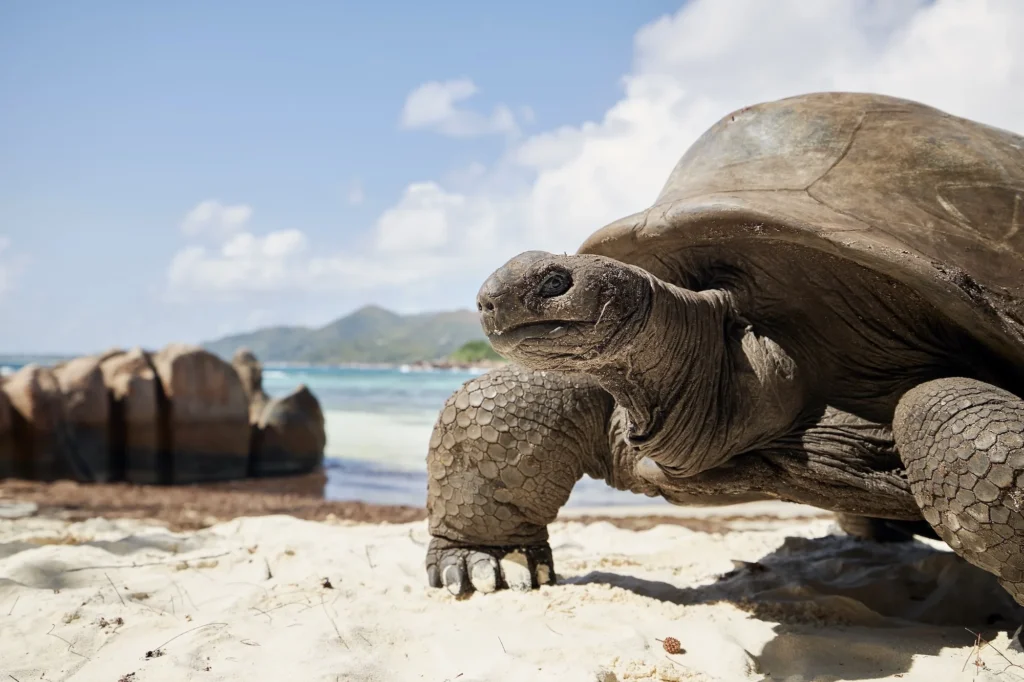
Yes. Visitors can see giant tortoises in several parts of the Galapagos Islands, depending on the island, season, and authorized visitor routes.
Santa Cruz Island is well known for opportunities to observe giant tortoises in highland areas. Visitors can also learn about tortoise conservation at authorized visitor facilities, including the Fausto Llerena Tortoise Center.
Other islands have tortoise populations that can be observed in suitable habitats through permitted excursions.
Wildlife viewing should always follow the rules of the Galapagos National Park. Visitors should remain at a safe distance, follow their guide’s instructions, avoid touching or feeding animals, and stay on authorized trails.
Responsible tourism can support conservation by helping fund local services, research, and protected areas.
Interesting Facts About Galapagos Giant Tortoises
Here are some fascinating facts about these remarkable reptiles.
- They can live for more than a century. Many giant tortoises are believed to live for 100 years or longer.
- They are herbivores. Their diet includes grasses, leaves, fruits, and cactus pads.
- They have different shell shapes. Domed and saddle-backed shells reflect adaptations to different environments.
- They can survive long periods without food or water. Their slow metabolism and ability to store water help them cope with difficult conditions.
- They spend many hours resting. Their activity depends on temperature, food availability, and other environmental conditions.
- They help spread seeds. Their feeding and movement contribute to the regeneration of plant communities.
- They are important to island ecosystems. Their grazing and movement influence vegetation and habitat structure.
- They develop slowly. Young tortoises can take many years to reach reproductive maturity.
- Some populations were saved through conservation. Captive breeding, habitat restoration, and reintroduction have helped several populations recover.
- They inspired the name of the islands. The word Galápagos is linked to the Spanish term historically used for tortoises.
FAQs About Galapagos Giant Tortoises
1. What is the scientific name of the Galapagos giant tortoise?
Galapagos giant tortoises belong to the genus Chelonoidis. The scientific name of an individual species depends on the island or population, such as Chelonoidis hoodensis for the Española giant tortoise.
2. How big can a Galapagos giant tortoise get?
Large adults can weigh around 250 kilograms or more, and some may reach approximately 1.5 meters in length or greater, depending on how length is measured and the species.
3. How long do Galapagos giant tortoises live?
They commonly live for more than 100 years. Some individuals may live considerably longer, although the ages of exceptionally old tortoises are not always verified.
4. What do Galapagos giant tortoises eat?
They eat grasses, leaves, fruits, cactus pads, flowers, and other vegetation. Their exact diet depends on the habitat and the plants available.
5. Why do some Galapagos tortoises have saddle-backed shells?
The raised front of a saddle-backed shell allows the tortoise to extend its neck higher to reach vegetation. This can be useful in dry habitats where food is less abundant near the ground.
6. Where can you find Galapagos giant tortoises?
They are native to the Galapagos Islands of Ecuador. Different species and populations occupy different islands and volcanic regions.
7. Are Galapagos giant tortoises endangered?
Several Galapagos giant tortoise species are threatened, although their conservation status varies by species. Some populations have recovered through conservation, while others remain at risk.
8. How do Galapagos giant tortoises reproduce?
Females lay eggs in nests dug into the soil. The eggs incubate for several months before the hatchlings emerge. Young tortoises grow slowly and are vulnerable to predators and environmental conditions.
9. What happened to Lonesome George?
Lonesome George was the last known individual of the Pinta Island giant tortoise population. He died in June 2012, and his death marked the loss of that known lineage. His story became an important symbol of the need to protect endangered wildlife.
10. Why are Galapagos giant tortoises important?
They help maintain island ecosystems through grazing, seed dispersal, and their effects on vegetation. They are also important for scientific research, evolutionary studies, and responsible wildlife tourism.
11. Do Galapagos giant tortoises have natural predators?
Large adults have few natural predators. Eggs and hatchlings are much more vulnerable, particularly to introduced animals such as rats, pigs, and dogs.
12. Can Galapagos giant tortoises swim?
They are land-dwelling reptiles rather than aquatic turtles. Although tortoises may float or move through water under certain circumstances, they are not adapted for an aquatic lifestyle.
Conclusion
The Galapagos giant tortoise is one of the most remarkable reptiles on Earth. Its enormous size, long lifespan, distinctive shell shapes, and ability to survive in challenging environments make it an important part of the natural history of the Galapagos Islands.
These tortoises also play a vital role in maintaining island ecosystems. By feeding on vegetation, spreading seeds, and influencing plant growth, they help support the landscapes and wildlife around them.
However, their history shows how human activities can place even long-lived animals at risk. Hunting, introduced predators, and habitat damage caused severe declines in many populations. Conservation programs have helped restore some of these populations, but long-term protection remains necessary.
Learning about Galapagos giant tortoises helps us understand evolution, biodiversity, and the importance of protecting fragile ecosystems. With continued research, responsible tourism, and effective conservation, these remarkable animals can continue to survive in their natural home for generations to come.
Disclaimer – This article is for educational purposes. Tortoise populations, scientific classifications, and conservation status can change as new research becomes available. Consult current information from conservation organizations and the Galapagos National Park Directorate for the latest details.