The Galapagos marine iguana is one of the most unusual reptiles on Earth. Found only in the Galapagos Islands of Ecuador, this remarkable animal is the only modern lizard known to forage regularly in the ocean. It swims through Pacific waters, dives to feed on marine algae, and returns to rocky shores to warm itself in the sun.
With its dark skin, flattened tail, sharp claws, and distinctive appearance, the marine iguana has become one of the most recognizable animals in the Galapagos. Its ability to survive in both marine and land environments makes it especially interesting to scientists and wildlife enthusiasts.
This guide covers everything you need to know about the Galapagos marine iguana, including its habitat, diet, physical features, behavior, reproduction, conservation status, and where visitors can see it.
Key Takeaways
- The Galapagos marine iguana is the only modern lizard known to forage regularly in the ocean.
- Marine iguanas live exclusively in the Galapagos Islands of Ecuador and feed mainly on marine algae.
- Their flattened tails help them swim, while strong claws help them grip slippery rocks.
- Specialized nasal salt glands allow marine iguanas to remove excess salt from their bodies.
- Marine iguanas are vulnerable to food shortages caused by El Niño, introduced predators, pollution, and environmental changes.
- Visitors can observe marine iguanas in their natural habitat by following wildlife protection rules and maintaining a respectful distance.
What Is a Galapagos Marine Iguana?
The Galapagos marine iguana, scientifically known as Amblyrhynchus cristatus, is a reptile belonging to the iguana family. It is native to the Galapagos Islands, an archipelago in the Pacific Ocean that belongs to Ecuador.
Unlike most iguanas, which live mainly on land or in trees, marine iguanas enter the ocean to find food. They feed primarily on marine algae growing on coastal rocks and underwater surfaces.
Their bodies have developed several adaptations that help them survive this unusual lifestyle. Their flattened tails help them swim, their strong claws provide a firm grip on rocks, and specialized glands help remove excess salt from their bodies.
Marine iguanas spend much of their time resting on rocky shores. After feeding in cold water, they return to land and bask in the sun to warm their bodies.
Where Do Galapagos Marine Iguanas Live?
Marine iguanas live exclusively in the Galapagos Islands, located about 1,000 kilometers off the coast of mainland Ecuador. They occur across many islands in the archipelago, although their size, appearance, and abundance vary between populations.
Their Natural Habitat
Marine iguanas are commonly found along rocky coastlines, volcanic lava platforms, coastal ledges, and tidal areas where marine algae grow.
These locations provide access to food and suitable places to rest after swimming. Dark volcanic rocks also absorb heat from the sun, helping the reptiles warm up after spending time in cold seawater.
Females may travel inland to find suitable nesting areas, where they dig burrows in sandy or loose soil and lay their eggs.
Which Islands Have Marine Iguanas?
Marine iguanas occur on several Galapagos islands, including Isabela, Fernandina, Santa Cruz, San Cristobal, and Española. They are also found on other islands and nearby islets.
Their appearance can vary between locations. For example, males on Española may display striking red and green colors during the breeding season, while marine iguanas elsewhere often appear mostly gray or black.
These differences are an example of how wildlife populations can develop distinct characteristics across isolated islands.
What Do Galapagos Marine Iguanas Eat?
Marine iguanas are primarily herbivores. Their main food source is marine algae, which they scrape from rocks and other surfaces using their specialized teeth.
Depending on their size and the local conditions, they may feed in shallow water or dive to reach algae growing below the surface.
How They Find Food
Marine iguanas often enter the sea when conditions are suitable for feeding. Some graze in shallow areas where waves wash over rocks, while others swim and dive to reach submerged algae.
Larger adults can generally access deeper feeding areas than smaller individuals. This difference can help reduce competition for food between animals of different sizes.
Their feeding behavior depends on several factors, including water temperature, tides, wave strength, and the amount of algae available.
Do Marine Iguanas Eat Fish?
Marine iguanas primarily eat algae rather than fish. Their feeding structures and behavior are adapted to grazing on marine plant material.
Because their diet depends heavily on algae, changes in ocean conditions can directly affect their survival. When food becomes scarce, marine iguanas may struggle to obtain enough energy.
How Do Marine Iguanas Swim and Dive?
Marine iguanas are strong swimmers despite spending much of their time on land. Their bodies have several features that help them move through the water and feed on algae.
Their Flattened Tail
The marine iguana has a long, flattened tail that works like a paddle. It moves the tail from side to side to propel itself through the water.
This swimming technique helps the animal travel between rocky shores and underwater feeding areas.
Strong Claws for Gripping Rocks
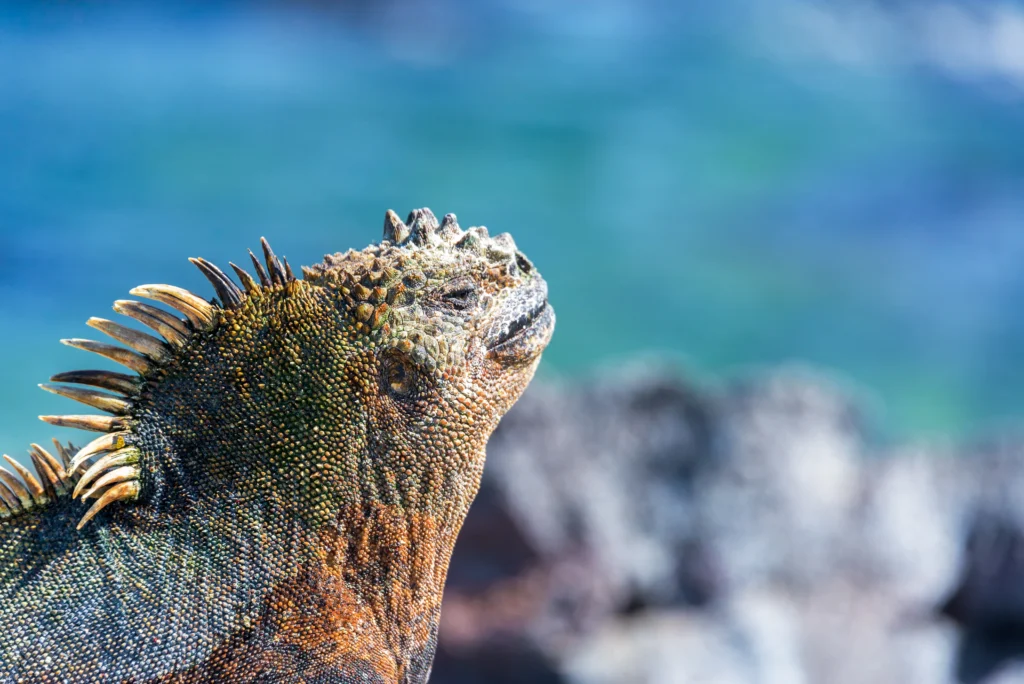
Marine iguanas have long, sharp claws that help them grip uneven rocks. These claws are especially useful when they climb over coastal lava formations or hold onto surfaces while feeding in areas affected by waves.
How Deep Can Marine Iguanas Dive?
Marine iguanas can dive to depths of around 30 meters in some circumstances, although many feed in shallower water. Their diving ability depends on factors such as body size, water temperature, food availability, and individual behavior.
Because they are cold-blooded reptiles, marine iguanas must manage their body temperature carefully. Spending too much time in cold water can lower their body temperature and reduce their ability to move effectively.
After feeding, they generally return to land to warm themselves in the sun.
How Do Marine Iguanas Get Rid of Salt?
One of the most remarkable adaptations of the Galapagos marine iguana is its ability to remove excess salt from its body.
While feeding in the ocean, marine iguanas swallow some seawater and take in salt. Their bodies have specialized nasal salt glands that help remove excess salt from their blood.
Why Do Marine Iguanas Sneeze?
Marine iguanas often sneeze or forcefully expel salty fluid through their nostrils. This behavior helps them get rid of excess salt.
After the fluid dries, white salt crystals may become visible around the nose and head. These crystals are a normal result of salt removal and are not necessarily a sign of illness.
This adaptation is essential because marine iguanas regularly enter saltwater to find food. Without an effective way to remove excess salt, maintaining the body’s internal balance would be much more difficult.
Why Do Marine Iguanas Bask in the Sun?
Marine iguanas are ectothermic, meaning they rely on external sources of heat to regulate their body temperature. After swimming in cold Pacific waters, they need to warm up before becoming active again.
Basking on Volcanic Rocks
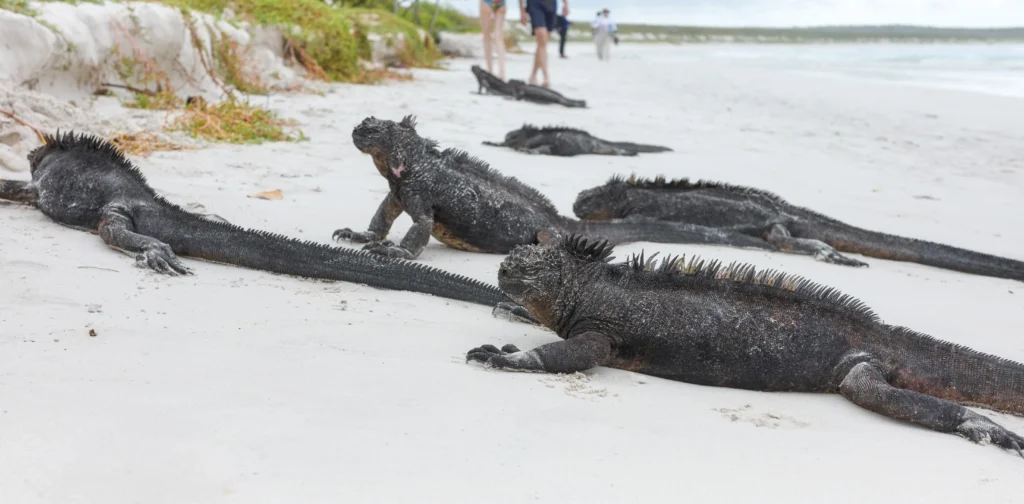
Dark volcanic rocks absorb heat from sunlight. Marine iguanas often rest on these rocks with their bodies spread out to absorb warmth.
Once their body temperature rises, they can move more efficiently and return to feeding.
Why Do They Gather in Groups?
Marine iguanas often rest close together, particularly during cooler periods. Gathering in suitable locations helps them use the same warm resting areas and conserve heat.
Although they can form large groups, they are not highly social in the same way as some mammals. Many groups form because the same rocky areas provide suitable warmth and resting places.
How Do Galapagos Marine Iguanas Reproduce?
Marine iguanas reproduce by laying eggs on land. Their breeding behavior varies by island and local environmental conditions.
Mating Season
During the breeding season, males may display brighter colors, particularly in some island populations. They can also compete with other males for access to females.
Male marine iguanas may use head movements, body displays, and territorial behavior during these interactions.
Egg Laying and Nests
After mating, females search for suitable nesting areas. They dig burrows in sandy or loose soil and lay their eggs inside.
The number of eggs varies between individuals and populations. The eggs remain in the nest while the embryos develop, with incubation influenced by environmental conditions.
Hatchlings
When the eggs hatch, young marine iguanas emerge from their nests and begin life independently. They must find food and avoid predators while growing.
Young iguanas face greater risks than adults because they are smaller and more vulnerable to predators. Their survival is important for maintaining healthy populations across the islands.
How Big Do Marine Iguanas Get?
Marine iguana size varies between island populations. Some individuals are relatively small, while others grow much larger.
They generally have stocky bodies, long tails, strong limbs, and rough-looking scales. Their appearance helps them blend into rocky coastal surroundings.
Why Do Their Colors Differ?
Most marine iguanas appear dark gray or black for much of the year. This coloration helps them absorb heat from sunlight after swimming.
During the breeding season, some males develop brighter colors. Iguanas from Española, for example, can display striking red and green shades, while other populations may show different color combinations.
These differences reflect variation between island populations and make the species particularly interesting to wildlife observers.
Are Galapagos Marine Iguanas Endangered?
The Galapagos marine iguana is classified as Vulnerable on the International Union for Conservation of Nature (IUCN) Red List. However, the risks faced by individual populations vary across the islands.
Several environmental and human-related factors can affect their survival.
El Niño and Food Shortages
One of the major threats to marine iguanas is the El Niño climate phenomenon. During strong El Niño events, warmer ocean conditions can reduce the availability of marine algae.
When food becomes scarce, marine iguanas may lose body mass and experience higher mortality. Research has also shown that some individuals can shrink in body size during prolonged food shortages. This unusual response helps them reduce their energy requirements when food is limited.
Introduced Predators
Animals introduced to the Galapagos, including cats, dogs, and rats, can threaten marine iguanas, particularly eggs and young animals.
These predators can affect local populations and make it harder for young iguanas to survive to adulthood.
Plastic Pollution
Marine iguanas live close to the ocean, where plastic pollution can pose a risk. Plastic debris can affect coastal habitats and wildlife, creating concerns about ingestion and other harmful interactions.
Reducing waste and preventing litter from entering the ocean are important steps toward protecting the marine environment.
Climate Change
Changes in ocean temperature and marine ecosystems can affect algae availability and the conditions marine iguanas need to survive.
Conservation work, habitat protection, and population monitoring help researchers understand these risks and identify ways to protect the species.
Where Can You See Marine Iguanas in the Galapagos?
Marine iguanas are among the most recognizable animals visitors can encounter in the Galapagos Islands. They are often visible along rocky coastlines, beaches, and lava formations.
Best Islands for Marine Iguana Sightings
Marine iguanas can be seen on several islands, including Isabela, Fernandina, Santa Cruz, San Cristobal, and Española.
Their abundance and appearance vary by location. Visitors may see them basking on black lava rocks, resting in groups, or swimming near the shore.
Wildlife sightings depend on the location, season, and conditions during a visit. Seeing an animal is never guaranteed, even in areas where it commonly occurs.
How to Observe Marine Iguanas Responsibly
If you visit the Galapagos, follow these guidelines:
- Keep a respectful distance from wildlife.
- Never touch, chase, or attempt to move an iguana.
- Do not feed wild animals.
- Avoid blocking an animal’s path to the sea or its resting place.
- Follow marked trails and local protected-area rules.
- Do not leave litter or plastic waste behind.
- Follow your naturalist guide’s instructions.
Responsible wildlife viewing helps protect marine iguanas and their natural habitat.
Why Are Marine Iguanas Important to the Galapagos Ecosystem?
Marine iguanas are part of the Galapagos coastal food web. By feeding on marine algae, they connect the ocean’s primary production with the island’s coastal ecosystem.
Their specialized feeding behavior also makes them an important example of how animals adapt to unusual food sources and challenging environmental conditions.
Because they depend heavily on marine algae, marine iguanas can help scientists study how changes in ocean temperature and food availability affect wildlife.
Their survival depends on healthy coastal habitats, adequate food supplies, and continued protection of the Galapagos ecosystem.
Frequently Asked Questions
Are Galapagos marine iguanas dangerous to humans?
No. Marine iguanas are generally not aggressive toward people. However, they may bite or scratch if threatened or handled, so they should always be observed without touching or disturbing them.
How long do Galapagos marine iguanas live?
Marine iguanas can live for several decades in the wild, although their lifespan varies depending on environmental conditions, food availability, and other survival factors.
Can Galapagos marine iguanas survive in freshwater?
They can drink freshwater when it is available, but they are adapted to marine environments and obtain much of their food from the ocean. Their specialized salt glands help them manage the salt they take in while feeding.
Do marine iguanas have natural predators?
Yes. Eggs and young marine iguanas are vulnerable to predators such as introduced rats, cats, and dogs. Native predators, including certain snakes and birds of prey, may also threaten young or smaller individuals in some locations.
Can marine iguanas change their body size?
Yes. During prolonged food shortages, some marine iguanas can temporarily shrink in body length. This unusual adaptation helps reduce their energy requirements when marine algae become scarce.
How do marine iguanas communicate with each other?
Marine iguanas use body movements, head bobbing, and other visual displays to communicate. Males may use these behaviors during territorial disputes and courtship.
Do marine iguanas have teeth?
Yes. They have small, specialized teeth that help them scrape algae from rocks and other surfaces. Their teeth are suited to their plant-based diet rather than catching and tearing prey.
Can marine iguanas hold their breath underwater?
Yes. Marine iguanas can remain underwater while searching for food. The length of a dive depends on factors such as water temperature, activity level, body size, and feeding conditions.
Why are marine iguanas found only in the Galapagos Islands?
Marine iguanas evolved in the Galapagos, where rocky volcanic coastlines and abundant marine algae provide suitable habitat. Their specialized adaptations make them closely associated with this island environment.
What is the best way to photograph a marine iguana?
Use a camera with a suitable zoom lens, remain at a respectful distance, and avoid blocking the animal’s path. Photographing from marked trails and following your guide’s instructions helps protect the iguana and its habitat.
Conclusion
The Galapagos marine iguana is a remarkable reptile with adaptations that allow it to feed in the ocean and survive along rocky volcanic shores. Its flattened tail helps it swim, its claws provide a firm grip on rocks, and specialized nasal glands remove excess salt from its body.
Marine iguanas depend on marine algae, sunlight, and suitable coastal habitats. However, El Niño events, introduced predators, pollution, and climate change create challenges for their survival.
Visitors can help protect these unusual animals by observing them responsibly and following Galapagos National Park rules. Protecting marine iguanas also means protecting the unique marine and coastal environment on which they depend.