The Galapagos Dove is one of the most fascinating birds found in the Galapagos Islands. Although it may not be as famous as the giant tortoise or the blue-footed booby, the Galapagos Dove has an important place in the islands’ ecosystem and history. Known for its calm behavior, beautiful reddish-brown feathers, and unique adaptation to island life, this bird attracts birdwatchers, researchers, and nature lovers from around the world.
The Galapagos Islands are famous for their rare wildlife and role in the study of evolution. Many species found there exist nowhere else on Earth, and the Galapagos Dove is one of those special animals. It has adapted over thousands of years to survive in the dry and volcanic environment of the islands.
This detailed guide covers everything you need to know about the Galapagos Dove, including its appearance, habitat, behavior, diet, breeding habits, conservation status, and interesting facts.
What Is the Galapagos Dove?
The Galapagos Dove is a small to medium-sized ground-dwelling dove native to the Galapagos Islands. Its scientific name is Zenaida galapagoensis.
This bird belongs to the dove and pigeon family, which includes many species found around the world. However, the Galapagos Dove is unique because it evolved separately on the isolated islands of the Galapagos archipelago.
Unlike city pigeons that people commonly see in urban areas, the Galapagos Dove is more closely connected to natural habitats. It spends much of its time on the ground searching for food and moving quietly through dry vegetation.
The bird is considered one of the endemic species of the Galapagos, meaning it naturally occurs only there.
Physical Appearance of the Galapagos Dove
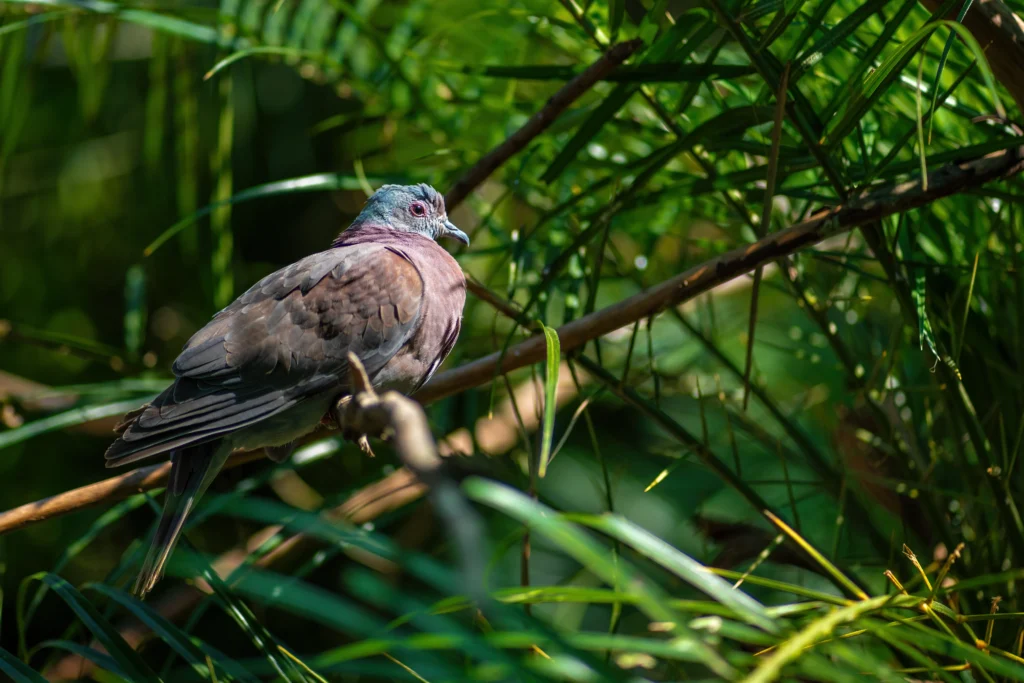
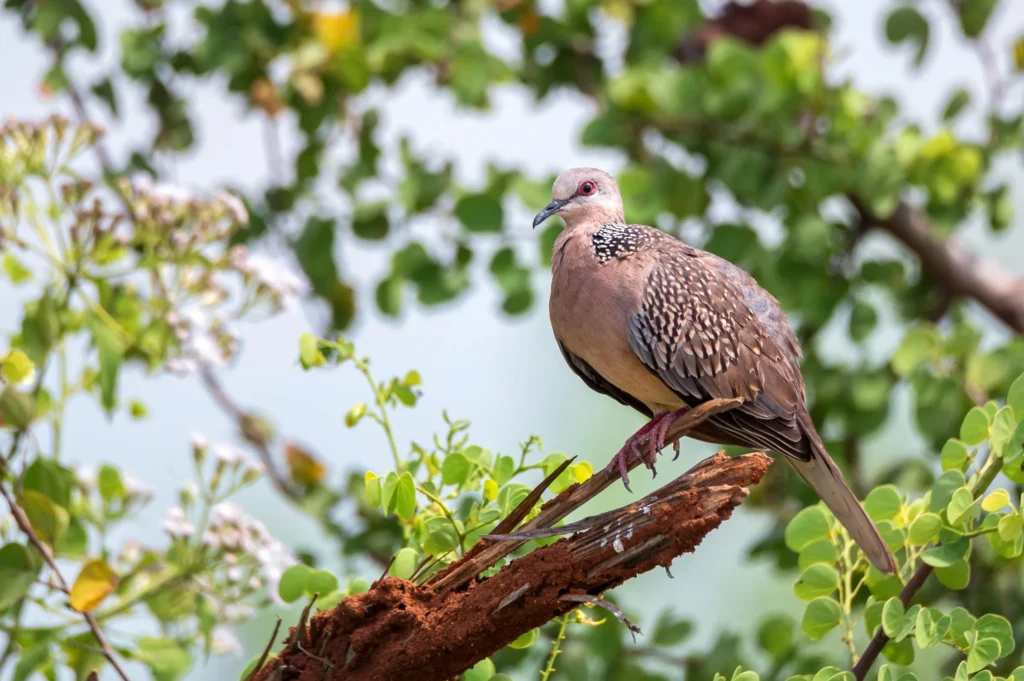
The Galapagos Dove has a beautiful and elegant appearance. Its plumage combines earthy colors that help it blend into the dry island environment.
Some of its most noticeable features include:
- Reddish brown feathers
- Black spots on the wings
- Iridescent patches on the neck
- Pinkish chest
- Dark eyes
- Slender black beak
- Bright reddish legs
The shiny patches on the neck can appear purple, green, or bronze depending on sunlight.
Male and female doves look fairly similar, although males are usually slightly larger and brighter in color.
Juvenile birds tend to have duller feathers and less noticeable markings.
Size and Wingspan
The Galapagos Dove is relatively small compared to many other dove species.
Average measurements include:
- Length: Around 18 to 23 centimeters
- Weight: Approximately 70 to 100 grams
- Wingspan: About 30 to 35 centimeters
Despite their small size, these birds are strong fliers and can move quickly between rocky landscapes and vegetation.
Habitat and Distribution
The Galapagos Dove is found across several islands in the Galapagos archipelago.
It commonly lives on islands such as:
- Española
- Santa Cruz
- Santiago
- Isabela
- Genovesa
- Fernandina
The bird prefers dry lowland habitats rather than wet highland forests.
Typical habitats include:
- Arid shrublands
- Rocky lava fields
- Cactus forests
- Coastal dry areas
- Open woodland
The dove often stays near the ground and uses vegetation for shelter and nesting.
Evolution and Island Adaptation
The Galapagos Islands are famous for helping scientists understand evolution. The isolation of the islands allowed species to evolve independently over long periods.
The ancestors of the Galapagos Dove likely arrived from mainland South America thousands of years ago. Over time, they adapted to the unique environmental conditions of the islands.
The Galapagos Dove developed traits that help it survive in:
- Dry climates
- Rocky terrain
- Areas with limited freshwater
- Predator-poor environments
The bird’s coloring provides camouflage against volcanic rocks and dry vegetation.
Like many Galapagos animals, the dove also evolved with relatively little fear of humans because the islands historically lacked major predators.
Behavior of the Galapagos Dove
The Galapagos Dove is known for its calm and quiet nature.
Unlike some highly social bird species, these doves are often seen alone or in pairs. They spend much of their time walking on the ground while searching for seeds and insects.
Ground Feeding Behavior
The Galapagos Dove is primarily a ground feeder. It walks slowly across open terrain while pecking at food items.
This behavior makes it easy for birdwatchers to observe them closely.
Flight Style
Although they spend much time on the ground, Galapagos Doves are capable of fast and direct flight when disturbed.
Their wings produce a quick fluttering sound during takeoff.
Territorial Behavior
Males may defend territories during breeding season. They use calls and displays to warn away rivals.
Diet and Feeding Habits
The Galapagos Dove is mostly herbivorous but may occasionally eat small insects.
Its diet commonly includes:
- Seeds
- Berries
- Fruits
- Small leaves
- Insects
- Flower buds
The bird depends heavily on seeds from local plants adapted to the dry island environment.
Water Consumption
One interesting adaptation is the dove’s ability to survive in areas with limited freshwater.
Like many desert-adapted birds, the Galapagos Dove obtains much of its moisture from food.
This adaptation is extremely useful in the dry regions of the islands.
Breeding and Reproduction
Breeding season depends partly on rainfall and food availability.
When conditions are favorable, Galapagos Doves begin courtship and nesting activities.
Courtship Displays
Male doves attract females through:
- Soft cooing sounds
- Puffing chest feathers
- Bowing movements
- Chasing behavior
These displays help establish pair bonds.
Nest Building
The nests are usually simple and lightly built.
Common nesting locations include:
- Low shrubs
- Cacti
- Small trees
- Rocky ledges
The nest is made from:
- Twigs
- Dry grass
- Plant fibers
Eggs and Chicks
Females usually lay one or two eggs.
Both parents help incubate the eggs and care for the chicks after hatching.
Young doves grow quickly and leave the nest within a few weeks.
Lifespan of the Galapagos Dove
The exact lifespan of wild Galapagos Doves varies depending on environmental conditions and predation risks.
Factors affecting lifespan include:
- Food availability
- Habitat quality
- Disease
- Introduced predators
Like many small birds, their survival depends heavily on successful breeding and safe nesting conditions.
Predators and Threats
Although the Galapagos Dove evolved in a relatively predator-free environment, modern threats have increased significantly.
Introduced Animals
One of the biggest dangers comes from nonnative species introduced by humans.
These include:
- Cats
- Rats
- Dogs
Introduced predators may:
- Eat eggs
- Attack chicks
- Hunt adult birds
Ground-nesting species like the Galapagos Dove are especially vulnerable.
Habitat Disturbance
Human activities can damage natural habitats through:
- Construction
- Agriculture
- Tourism expansion
Habitat loss reduces nesting and feeding areas.
Climate Change
Changes in climate patterns may affect:
- Rainfall
- Food availability
- Vegetation growth
Island ecosystems are highly sensitive to environmental changes.
Conservation Status
The Galapagos Dove is not currently considered critically endangered, but conservation monitoring remains important.
Because the species exists only within the Galapagos Islands, any major environmental problem could quickly affect populations.
Conservation efforts focus on:
- Protecting habitats
- Controlling invasive species
- Monitoring wildlife populations
- Promoting sustainable tourism
The protection of the Galapagos ecosystem benefits many endemic species, including the dove.
Importance of the Galapagos National Park
Much of the Galapagos archipelago is protected by the Galapagos National Park.
This protected area plays a major role in preserving native wildlife.
The park helps by:
- Limiting habitat destruction
- Managing tourism
- Supporting scientific research
- Controlling invasive species
Without these protections, many unique Galapagos species could face severe population declines.
Relationship With Charles Darwin
The Galapagos Islands are closely connected with Charles Darwin and the development of evolutionary theory.
Darwin visited the islands in 1835 during his famous voyage aboard the HMS Beagle.
The diversity of Galapagos wildlife helped inspire his ideas about natural selection and adaptation.
Although Darwin’s finches became especially famous, birds like the Galapagos Dove also contributed to scientific understanding of island evolution.
Why the Galapagos Dove Is Fearless Around Humans
Visitors to the Galapagos Islands often notice that wildlife appears unusually calm around people.
The Galapagos Dove is a good example of this behavior.
For thousands of years, the islands had very few natural predators. Because of this, many animals did not evolve strong fear responses toward large animals.
As a result, Galapagos Doves often allow humans to approach relatively closely.
This fearlessness makes the islands excellent for wildlife observation and photography.
However, it also makes native species vulnerable to introduced predators and human disturbance.
Ecological Importance of the Galapagos Dove
Although small, the Galapagos Dove plays an important role in the island ecosystem.
Seed Dispersal
By eating fruits and seeds, the dove may help spread plant species across habitats.
Food Chain Contribution
The bird serves as prey for native predators such as the Galapagos Hawk.
Healthy prey populations support ecosystem balance.
Soil Interaction
Ground feeding birds can influence soil conditions and seed movement.
How the Galapagos Dove Differs From Mainland Doves
The Galapagos Dove has several unique features compared to mainland relatives.
Island Adaptation
It evolved specifically for life in volcanic island habitats.
Ground Living Behavior
The species spends significant time on the ground rather than in trees.
Fearlessness
It often shows less fear of humans than mainland dove species.
Limited Geographic Range
It exists only in the Galapagos Islands.
Birdwatching and Wildlife Tourism
Birdwatchers travel from around the world to see the Galapagos Dove in its natural habitat.
The bird is admired for:
- Its colorful plumage
- Calm behavior
- Unique evolutionary history
- Endemic status
The Galapagos Islands are considered one of the world’s top wildlife tourism destinations.
Responsible tourism helps support conservation while allowing people to appreciate nature.
Interesting Facts About the Galapagos Dove
Here are some fascinating facts about the species:
- It is found nowhere else on Earth.
- Its neck feathers can shine in different colors.
- It often walks rather than hops while feeding.
- It evolved in isolation for thousands of years.
- It can survive in dry habitats with little freshwater.
- It builds simple nests in shrubs and cacti.
- It is relatively unafraid of humans.
- It helps disperse plant seeds.
- It is part of the unique Galapagos ecosystem.
- It contributed indirectly to scientific studies of evolution.
Scientific Research on the Galapagos Dove
Scientists study the Galapagos Dove for several reasons.
Research areas include:
- Evolutionary biology
- Island ecology
- Bird behavior
- Genetics
- Conservation science
Because island species evolve under unique conditions, they provide valuable information about adaptation and biodiversity.
The Galapagos Islands continue to serve as one of the most important natural laboratories in the world.
Challenges Facing Island Birds
Island bird species often face greater risks than mainland birds.
Reasons include:
- Small populations
- Limited habitat
- Isolation
- Low genetic diversity
- Vulnerability to invasive species
The Galapagos Dove represents the delicate balance of island ecosystems.
Protecting island species requires careful environmental management and long-term conservation planning.
Climate Change and Future Risks
Climate change may affect the Galapagos ecosystem in multiple ways.
Potential impacts include:
- Altered rainfall patterns
- Reduced food availability
- Habitat shifts
- Changes in vegetation
Even small environmental changes can strongly affect isolated island species.
Scientists continue monitoring how climate conditions influence wildlife populations in the Galapagos.
Why the Galapagos Dove Matters
The Galapagos Dove is important for many reasons.
Ecological Importance
It contributes to seed dispersal and ecosystem balance.
Scientific Importance
It helps scientists study evolution and island adaptation.
Conservation Importance
Protecting the species supports broader ecosystem protection.
Educational Importance
The dove teaches people about biodiversity and environmental responsibility.
Conservation Efforts in the Galapagos
Conservation organizations and researchers continue working to protect native wildlife.
Major efforts include:
- Invasive species removal
- Habitat restoration
- Wildlife monitoring
- Environmental education
- Sustainable tourism management
The survival of species like the Galapagos Dove depends on continued conservation support.
The Future of the Galapagos Dove
The future of the Galapagos Dove largely depends on preserving the fragile ecosystems of the islands.
Positive conservation efforts have helped many species survive despite modern environmental pressures.
However, continued vigilance is necessary to protect against:
- Habitat destruction
- Invasive species
- Climate change
- Human disturbance
Maintaining healthy ecosystems will help ensure that future generations can continue to see these remarkable birds.
FAQs About the Galapagos Dove
1. Can the Galapagos Dove be kept as a pet?
No, the Galapagos Dove is a protected wild species and should not be kept as a pet. It belongs in its natural habitat within the Galapagos Islands.
2. What sound does the Galapagos Dove make?
The Galapagos Dove produces soft cooing calls that are often used during communication and courtship.
3. Are Galapagos Doves active all day?
Yes, they are mainly active during the daytime when they search for food, interact with mates, and explore their surroundings.
4. Do Galapagos Doves travel in flocks?
They are usually seen alone or in pairs, although small groups may occasionally gather in feeding areas.
5. How do Galapagos Doves protect themselves from predators?
They rely on camouflage, quick flight, and hiding in vegetation to avoid danger.
6. What plants are important to the Galapagos Dove?
The bird depends on native shrubs, cactus species, and seed-producing plants found in the dry regions of the islands.
7. Are Galapagos Doves noisy birds?
No, they are generally quiet birds and are much less noisy than many urban pigeons.
8. Can tourists easily see Galapagos Doves?
Yes, they are commonly seen by visitors on several islands because they are relatively calm around humans.
9. Do Galapagos Doves compete with other birds for food?
Sometimes they may compete with other ground-feeding birds, especially in areas where food is limited.
10. Why are endemic birds like the Galapagos Dove important?
Endemic species are important because they exist only in one location and help scientists understand biodiversity, evolution, and ecosystem health.
Conclusion
The Galapagos Dove is a beautiful and important part of the Galapagos Islands’ unique wildlife. Its calm nature, colorful feathers, and fascinating evolutionary history make it one of the most interesting birds in the region.
Although it may appear simple at first glance, the Galapagos Dove represents thousands of years of adaptation to island life. From surviving in dry volcanic landscapes to evolving fearlessness around humans, the species tells an incredible story about nature and evolution.
Like many island animals, the Galapagos Dove also reminds us how fragile ecosystems can be. Protecting this species means protecting the larger Galapagos environment and the extraordinary biodiversity that exists there.
As scientific research and conservation efforts continue, the Galapagos Dove remains an enduring symbol of the natural beauty and ecological importance of the Galapagos Islands.