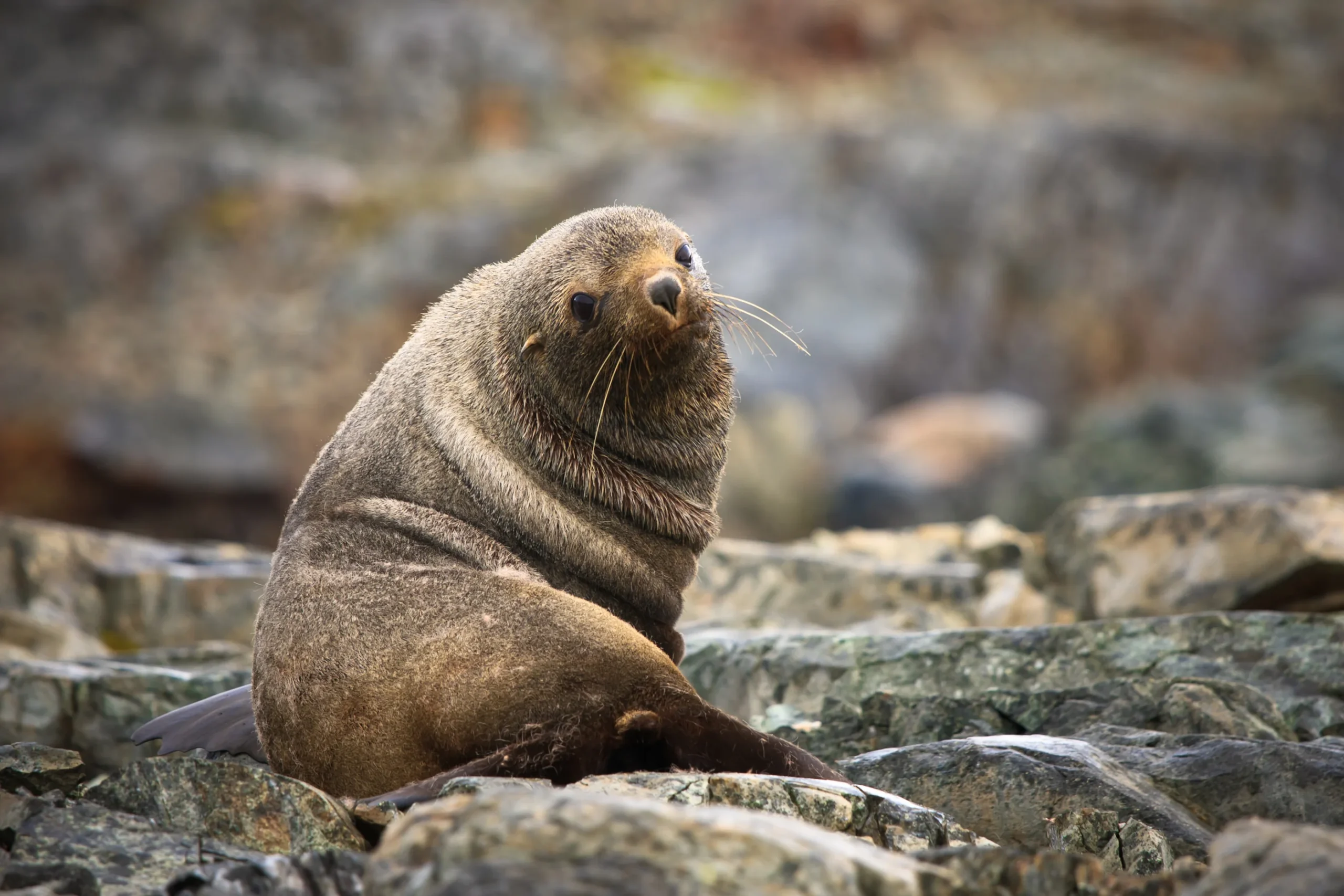
The Galapagos sea lion is one of the most recognizable animals in the Galapagos Islands. Known for its playful behavior, curious personality, and impressive swimming abilities, this marine mammal is often seen resting on sandy beaches, rocky shores, docks, and even public benches. Visitors to the islands may also encounter sea lions swimming alongside boats or moving gracefully through the water.
Despite their relaxed appearance on land, Galapagos sea lions are skilled hunters that depend on a healthy marine ecosystem for survival. They spend much of their lives moving between the ocean and the shore, feeding on fish and other marine animals while raising their young in coastal colonies.
Scientifically known as Zalophus wollebaeki, the Galapagos sea lion is native to the Galapagos Archipelago and nearby waters of Ecuador. It is an important part of the region’s marine biodiversity, but its population faces several challenges, including climate change, food shortages, disease, and pollution.
In this guide, we explore where Galapagos sea lions live, what they eat, how they reproduce, their behavior, and why protecting them is important.
Key Takeaways
- The Galapagos sea lion is a marine mammal native mainly to the Galapagos Islands.
- Its scientific name is Zalophus wollebaeki.
- It belongs to the eared seal family, which means it has visible external ears.
- Its diet includes fish, squid, and other marine animals.
- Sea lions are social animals that gather in colonies along beaches and rocky shores.
- Females usually give birth to one pup at a time.
- The species is classified as Endangered.
- Climate change, El Niño events, pollution, disease, and human disturbance threaten its survival.
What Is a Galapagos Sea Lion?
The Galapagos sea lion is a species of eared seal found primarily in the waters surrounding the Galapagos Islands. It belongs to the family Otariidae, which includes sea lions and fur seals.
Unlike true seals, sea lions have small external ear flaps and can rotate their rear flippers forward underneath their bodies. This allows them to move more easily on land than true seals, which generally move by wriggling their bodies.
Galapagos sea lions are well adapted to both land and water. Their streamlined bodies help them swim efficiently, while their powerful front flippers provide propulsion underwater.
They are also known for their social nature. Large groups often gather on beaches and low rocky areas to rest, communicate, raise pups, and establish territories.
The Galapagos sea lion is one of two native pinnipeds commonly associated with the archipelago. The other is the Galapagos fur seal, a separate species that generally has thicker fur and different physical characteristics.
Where Do Galapagos Sea Lions Live?
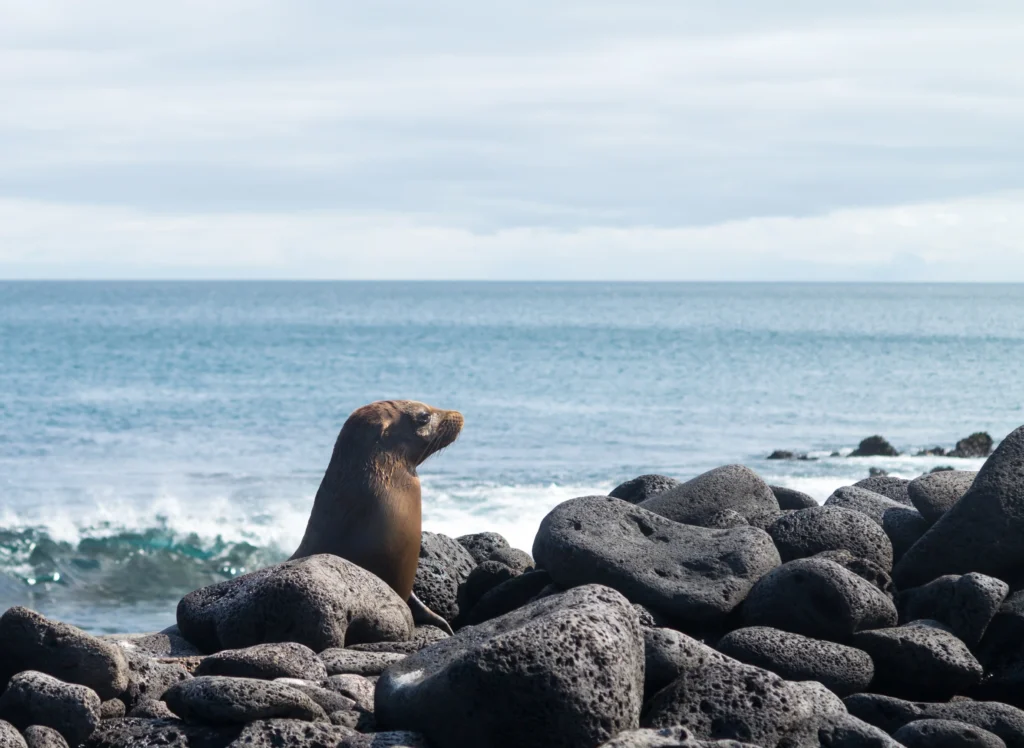
Galapagos sea lions are found mainly throughout the Galapagos Islands, an archipelago belonging to Ecuador in the Pacific Ocean. They live along the coastlines of many islands and use beaches, rocky shores, sheltered coves, and small offshore areas as resting and breeding locations.
Some breeding colonies also occur on Isla de la Plata, near mainland Ecuador. However, the Galapagos Islands remain the species’ primary home.
Sea lions spend much of their time close to shore, where they can find food and return to resting areas. Their coastal habitats provide important locations for breeding, nursing pups, and interacting with other members of their colonies.
Popular Places to See Galapagos Sea Lions
Visitors may encounter sea lions at several locations throughout the archipelago.
San Cristobal Island: This island is well known for its sea lion colonies. Animals can often be seen resting near Puerto Baquerizo Moreno, along beaches, and around coastal areas.
Santa Cruz Island: Sea lions are commonly spotted around Puerto Ayora and nearby coastal locations. They may rest on docks, beaches, and waterfront structures.
Isabela Island: Isabela has extensive coastal habitats where sea lions can be observed resting and swimming.
Española Island: This island is known for its wildlife, including sea lions that use its beaches and rocky shorelines.
Floreana Island: Sea lions can also be found along Floreana’s coastal areas, where they share the environment with other native wildlife.
Their presence throughout the archipelago makes them one of the marine mammals visitors are most likely to encounter during a Galapagos trip.
What Do Galapagos Sea Lions Look Like?
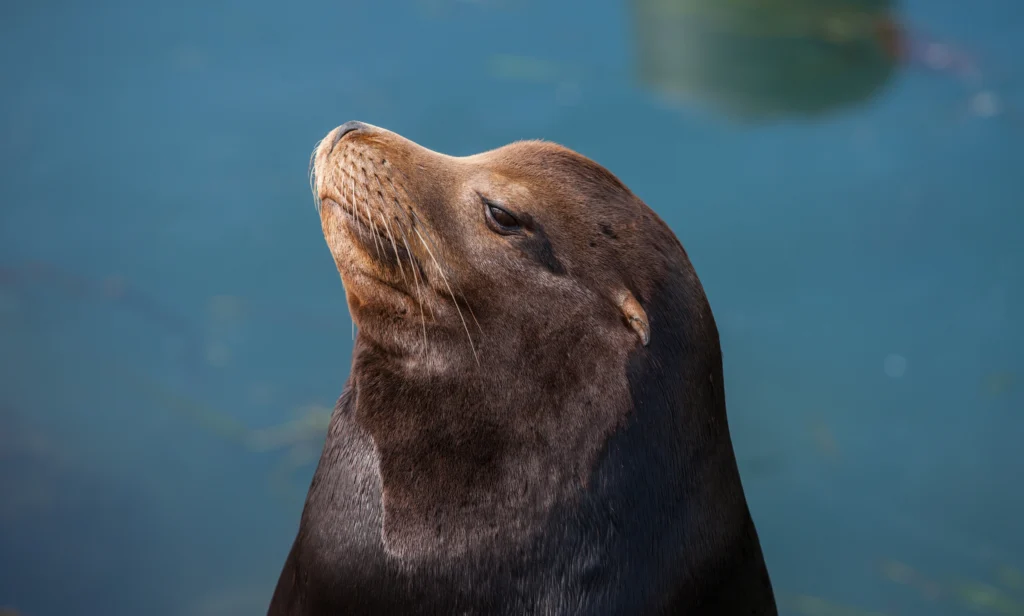
Galapagos sea lions have streamlined bodies, short fur, strong front flippers, and noticeable external ears.
Their coloring usually ranges from brown and gray to lighter shades. Newborn pups are often darker, with a rich brown appearance.
One of the most noticeable differences between male and female Galapagos sea lions is their size.
Male Galapagos Sea Lions
Adult males, also called bulls, are considerably larger and heavier than females. They have thick necks, broad chests, and a noticeable raised area on their foreheads.
Large males can weigh several hundred kilograms, although size varies between individuals.
Their larger bodies help them compete with other males for breeding territories. During the breeding season, dominant males may spend considerable time defending areas of the beach where females gather.
Female Galapagos Sea Lions
Females are smaller and generally have more slender bodies than males. They usually have narrower necks and lack the prominent forehead bump seen in mature males.
Female sea lions play the primary role in caring for pups. They feed at sea and return to shore to nurse their young.
According to the Galapagos Conservation Trust, females average around 1.5 meters in length, while males average around 2 meters.
What Do Galapagos Sea Lions Eat?
Galapagos sea lions are carnivores that feed mainly on marine animals. Their diet includes different types of fish, squid, and other available prey.
Common food sources include:
- Sardines
- Small schooling fish
- Lanternfish
- Squid
- Octopus
- Other small marine animals
The exact diet depends on the location, season, and availability of prey.
Sea lions are active hunters. They use their excellent underwater movement and sensitive whiskers to locate and capture food.
How Do They Catch Their Food?
Galapagos sea lions usually hunt underwater. They swim through areas where fish gather and use their speed and maneuverability to catch prey.
Their whiskers, known as vibrissae, help them detect movements and vibrations in the water. This ability can be useful when locating prey in changing underwater conditions.
They often feed during trips away from their resting beaches. After hunting, they return to shore to rest, socialize, or care for their pups.
How Does El Niño Affect Their Food Supply?
El Niño is a climate pattern that changes ocean temperatures and influences weather and marine conditions across the Pacific.
During strong El Niño events, warmer water can reduce the availability of nutrients in some parts of the ocean. This can affect the abundance and distribution of fish that sea lions depend on.
When food becomes scarce, adult sea lions may need to travel farther or spend more time searching for prey. Nursing mothers can struggle to find enough food while also providing milk for their pups.
Food shortages can reduce reproductive success and increase pup mortality. This makes changing ocean conditions a serious concern for the species.
How Do Galapagos Sea Lions Behave?
Galapagos sea lions are social and active animals. They spend time resting in groups, swimming, communicating, playing, and defending territories.
Their behavior can change depending on age, sex, breeding season, and environmental conditions.
They Live in Colonies
Sea lions commonly gather in groups called colonies. These groups may include adult females, pups, juveniles, and adult males.
Resting together provides opportunities for social interaction and breeding. It also allows young sea lions to remain close to other members of the colony.
Some males that do not hold breeding territories gather in separate bachelor groups.
They Are Curious Animals
Galapagos sea lions are often curious about their surroundings. They may approach swimmers, snorkelers, or boats to investigate movement in the water.
Underwater, they can perform quick turns, spins, and sudden changes in direction. Their playful swimming is one reason they are popular with wildlife visitors.
However, curiosity does not mean they are domesticated or safe to approach. They remain wild animals and need space.
They Communicate Through Sounds
Sea lions use a range of vocalizations to communicate. Their sounds include barking, growling, and calls between mothers and pups.
Communication is particularly important in crowded breeding colonies, where mothers need to recognize their own young.
Pups develop distinctive calls, helping mothers identify them when they return from feeding trips.
They Are Strong Swimmers
Their streamlined bodies and powerful front flippers allow them to move quickly through the water.
They can swim, dive, and turn with impressive control. This helps them catch fish and avoid potential predators.
They also spend time resting on land because they need to conserve energy between feeding trips.
How Do Galapagos Sea Lions Reproduce?
Reproduction takes place in coastal breeding colonies, where males compete for territories and females give birth to their pups.
The breeding season generally extends through much of the second half of the year, although timing can vary between islands and environmental conditions.
Territorial Males
During the breeding season, adult males compete for access to areas of the beach used by females.
Dominant bulls defend their territories by barking, displaying aggressive behavior, and chasing away rival males.
These territorial disputes can involve physical confrontations. Males may push, bite, and chase one another to establish or maintain control.
Holding a territory requires considerable energy, and males may lose their position when challenged by stronger rivals.
Birth of Pups
Female Galapagos sea lions generally give birth to one pup at a time.
Newborn pups depend on their mothers for milk, warmth, and protection. During the first days after birth, mothers and pups establish a strong bond.
Recognizing each other’s calls and scent is important because colonies can contain many animals and several young pups.
Mother and Pup Relationship
After spending time with her newborn, the mother begins making feeding trips into the ocean.
She returns to the shore to nurse the pup before leaving again to search for food.
This process continues as the young sea lion grows and becomes more independent. Pups gradually learn to swim and develop the skills needed to catch their own food.
The early stages of life are especially important because young sea lions are vulnerable to food shortages, predators, and environmental changes.
What Is the Difference Between a Galapagos Sea Lion and a Galapagos Fur Seal?
The Galapagos sea lion and Galapagos fur seal are two different marine mammal species found in the same archipelago. Although they may look similar at first, several physical and behavioral differences help distinguish them.
| Feature | Galapagos Sea Lion | Galapagos Fur Seal |
| Scientific name | Zalophus wollebaeki | Arctocephalus galapagoensis |
| Family | Otariidae | Otariidae |
| Appearance | Sleek body with relatively short fur | Thick, dense fur |
| Eyes | Relatively smaller appearance | Large, noticeable eyes |
| Habitat | Beaches and coastal areas | Often uses rocky shores and shaded areas |
| Feeding | Fish and other marine prey | Fish and squid |
| Behavior | Often rests in open coastal areas | Often rests in shaded rocky locations |
Both species are adapted to the marine environment, but they have different physical characteristics and ecological habits.
What Are the Natural Predators of Galapagos Sea Lions?
Adult Galapagos sea lions have relatively few natural predators, but they are not completely safe from other marine animals.
Potential predators include:
Sharks: Large sharks may prey on sea lions, particularly young or vulnerable individuals.
Killer whales: Orcas are powerful marine predators that can hunt marine mammals, including sea lions.
Pups may be more vulnerable because they are smaller and have less experience avoiding predators.
When threatened in the water, sea lions may try to reach shallow areas or return to shore. Their ability to move between land and water gives them different ways to respond to danger.
Are Galapagos Sea Lions Endangered?
Yes. The Galapagos sea lion is classified as Endangered on the IUCN Red List. Its population has experienced substantial declines, and conservation organizations continue to monitor the species.
Recent research estimates the archipelago’s population at approximately 17,200 to 24,200 individuals. This estimate reflects ongoing monitoring and should not be treated as a fixed population count.
Several threats contribute to the species’ conservation challenges.
1. Climate Change
Changing ocean temperatures can affect the availability and distribution of prey.
Strong El Niño events are particularly challenging because they can reduce food availability and affect breeding success.
2. Food Shortages
When fish populations become less accessible, sea lions may struggle to find enough food.
Nursing females and young pups are especially vulnerable because their survival depends on successful feeding.
3. Plastic Pollution
Plastic waste is a serious concern for marine wildlife. Sea lions can become entangled in discarded fishing gear, plastic packaging, and other debris.
Ingested plastic can also cause injury and health problems.
4. Diseases From Introduced Animals
Domestic dogs and other introduced animals can carry diseases that may spread to wildlife.
Close contact between pets and sea lion colonies in populated areas creates additional health risks.
5. Human Disturbance
Tourism and coastal development can affect sea lion resting and breeding areas.
When people approach too closely, touch animals, or block their access to the water, they can create unnecessary stress.
Galapagos Conservancy identifies climate change, human activity, pollution, and diseases associated with introduced animals as important concerns for the species.
How Are Galapagos Sea Lions Protected?
Protecting Galapagos sea lions requires cooperation between conservation organizations, researchers, local communities, and government authorities.
The Galapagos National Park Directorate manages protected areas and wildlife activities throughout the archipelago.
Research teams also monitor sea lion populations, health, feeding patterns, and movement.
Conservation work includes:
- Monitoring population numbers and breeding colonies.
- Studying the effects of climate change.
- Reducing plastic pollution.
- Preventing disease transmission from introduced animals.
- Protecting important coastal habitats.
- Educating visitors about responsible wildlife viewing.
- Improving management of areas where sea lions and people live close together.
In October 2025, the Galapagos National Park Directorate and Universidad San Francisco de Quito introduced a 2025–2030 conservation and sustainable-use management plan for sea lions on San Cristobal Island. The plan addresses the challenges of protecting colonies that live close to populated areas.
How Can Tourists Observe Galapagos Sea Lions Responsibly?
Seeing Galapagos sea lions in their natural environment can be one of the most memorable parts of a visit to the islands. However, visitors must remember that these are wild animals.
Follow these guidelines when observing them:
- Maintain the distance required by Galapagos National Park rules and your naturalist guide.
- Never touch, feed, or chase a sea lion.
- Avoid blocking its route between the beach and water.
- Do not disturb mothers and pups.
- Keep noise to a minimum near resting colonies.
- Never use flash photography when it may disturb wildlife.
- Avoid leaving food, plastic, or other waste behind.
- Follow instructions from licensed naturalist guides.
If a sea lion approaches you while snorkeling, remain calm and avoid trying to touch or follow it. Allow the animal to control the interaction and swim away whenever it chooses.
Responsible wildlife viewing helps protect the animals while allowing visitors to appreciate their natural behavior.
Frequently Asked Questions About Galapagos Sea Lions
1. What is the scientific name of the Galapagos sea lion?
The scientific name of the Galapagos sea lion is Zalophus wollebaeki. It is an endemic marine mammal found mainly around the Galapagos Islands.
2. How long do Galapagos sea lions live?
Galapagos sea lions commonly have an estimated lifespan of around 15 to 20 years, although survival varies depending on food availability, health, predators, and environmental conditions.
3. What do Galapagos sea lions eat?
They mainly eat fish, including sardines and other small schooling species. Their diet can also include squid, octopus, and other marine animals.
4. Where can you see Galapagos sea lions?
They can be seen throughout the Galapagos Archipelago, including San Cristobal, Santa Cruz, Isabela, Española, and Floreana. They often rest on beaches, rocky shores, and docks.
5. Are Galapagos sea lions dangerous?
They are generally not aggressive toward people when left undisturbed. However, they are powerful wild animals and can bite if they feel threatened, especially adult males defending territories. Visitors should never approach or touch them.
6. How many pups do Galapagos sea lions have?
Females generally give birth to one pup at a time. The mother nurses and protects the young animal while making trips into the ocean to find food.
7. Can Galapagos sea lions swim?
Yes. They are excellent swimmers and use their strong front flippers to move through the water. Their streamlined bodies help them turn quickly while hunting and playing.
8. Are Galapagos sea lions endangered?
Yes. They are classified as Endangered. Climate change, food shortages, pollution, disease, and human disturbance are among the major threats affecting their populations.
9. What is the difference between a sea lion and a seal?
Sea lions have visible external ear flaps and can rotate their rear flippers forward to help them move on land. True seals lack visible external ear flaps and move differently on land.
10. When is the best time to see Galapagos sea lions?
Galapagos sea lions live in the archipelago throughout the year, so visitors can encounter them in different seasons. Sightings depend on the island, local conditions, and wildlife activity.
Conclusion
The Galapagos sea lion is an important part of the unique wildlife found in the Galapagos Islands. Its playful behavior, strong swimming abilities, and social nature make it one of the most memorable marine mammals in the region.
Beyond its appeal to visitors, this species plays an important role in the marine ecosystem. Its survival depends on healthy ocean conditions, reliable food supplies, protected coastal habitats, and responsible human activity.
Although Galapagos sea lions face serious threats from climate change, pollution, disease, and habitat disturbance, conservation research and protection programs are helping scientists better understand their needs.
For travelers visiting the Galapagos Islands, observing these animals in the wild is a special experience. Respecting their space and following responsible wildlife guidelines helps protect this remarkable species for future generations.