The Galapagos mockingbird is one of the most fascinating birds found in the Galapagos Islands. Although it is often overshadowed by Darwin’s finches, the Galapagos mockingbird played an important role in the development of scientific ideas about evolution and adaptation.
Known for its intelligence, curiosity, and adaptability, this bird is a common sight in many parts of the Galapagos archipelago. It is famous for its bold behavior around humans and its ability to thrive in some of the islands’ harsh environments.
This complete guide explores everything you need to know about the Galapagos mockingbird, including its appearance, habitat, diet, behavior, reproduction, conservation status, and scientific importance.
What Is a Galapagos Mockingbird?
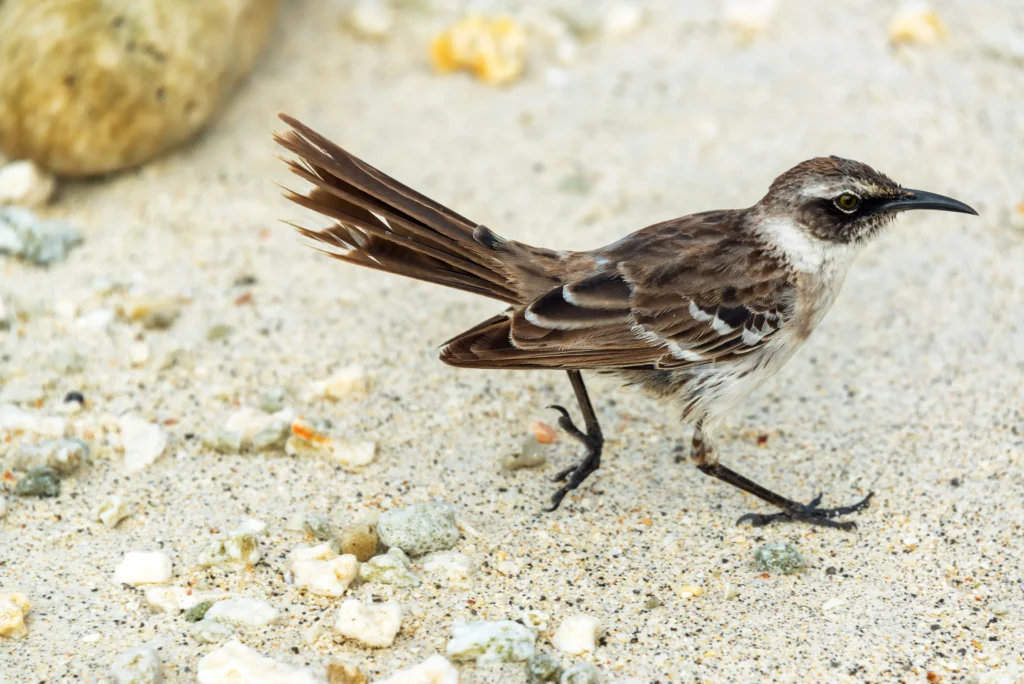
The Galapagos mockingbird is a medium-sized songbird native to the Galapagos Islands. It belongs to the mockingbird family, a group of birds known for their intelligence and vocal abilities.
Unlike many bird species that avoid human contact, Galapagos mockingbirds are often curious and approachable. They frequently investigate visitors and may come surprisingly close while searching for food or exploring their surroundings.
These birds are highly adaptable and can survive in a variety of habitats across the islands.
Scientific Classification
The Galapagos mockingbird belongs to the genus Mimus.
Scientists recognize several mockingbird species within the Galapagos archipelago, including:
- Galapagos Mockingbird
- San Cristobal Mockingbird
- Espanola Mockingbird
- Floreana Mockingbird
Each species occupies different islands and has developed unique characteristics over time.
The existence of multiple related species within the islands provides an excellent example of adaptation and evolution.
Why Is the Galapagos Mockingbird Important?
The Galapagos mockingbird holds a special place in scientific history.
When Charles Darwin visited the Galapagos Islands in 1835, he noticed that mockingbirds differed from island to island. These observations helped him recognize that species could change and adapt over time.
In fact, Darwin initially paid more attention to mockingbirds than to finches during his journey.
The differences among mockingbird populations provided some of the earliest clues that eventually contributed to the theory of evolution through natural selection.
Today, the birds remain important symbols of evolutionary science.
Where Do Galapagos Mockingbirds Live?
Galapagos mockingbirds are found throughout parts of the Galapagos archipelago.
Their habitats include:
- Coastal regions
- Dry forests
- Shrublands
- Volcanic landscapes
- Arid lowlands
- Cactus-covered areas
They are particularly well adapted to dry environments where food and water may be limited.
Different species occupy different islands, reducing competition and allowing each population to adapt to local conditions.
Physical Appearance
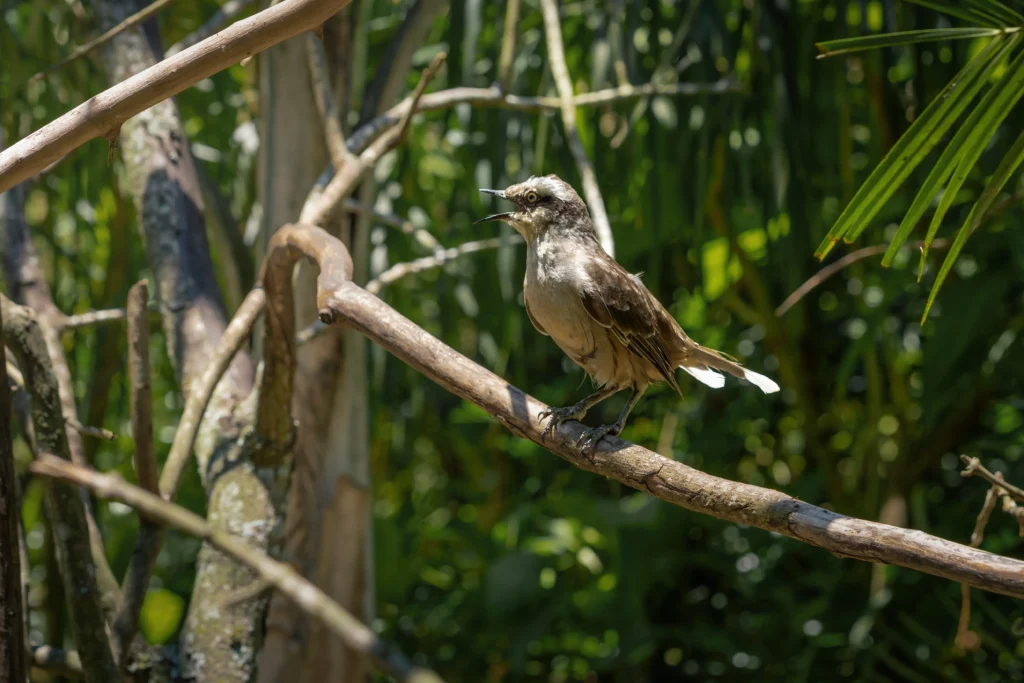
Galapagos mockingbirds have a distinctive appearance that makes them relatively easy to identify.
Size
These birds are medium-sized and generally larger than many finch species found in the Galapagos.
Most adults measure between 25 and 30 centimeters in length.
Coloration
Their feathers are mostly:
- Gray
- Brown
- White
- Light gray
The plumage helps them blend into the dry and rocky environments where they live.
Beak
The mockingbird’s beak is long, slender, and slightly curved.
This shape allows the bird to consume a wide variety of foods and forage efficiently in different habitats.
Eyes
Their bright eyes contribute to their alert and inquisitive appearance.
Many visitors notice how attentively these birds observe their surroundings.
Behavior and Personality
One of the most remarkable traits of Galapagos mockingbirds is their personality.
Curious Nature
These birds are known for being extremely curious.
They often approach people, animals, and unfamiliar objects to investigate them.
This behavior has made them popular among wildlife photographers and birdwatchers.
Intelligence
Galapagos mockingbirds display a high level of intelligence.
They quickly learn where food sources can be found and often adapt their behavior to changing environmental conditions.
Social Behavior
Many mockingbirds live in family groups.
Group members often cooperate in defending territories and protecting young birds.
This social structure increases the survival chances of offspring.
What Do Galapagos Mockingbirds Eat?
Galapagos mockingbirds are opportunistic feeders.
This means they eat a wide variety of foods depending on availability.
Common food sources include:
- Insects
- Fruits
- Seeds
- Nectar
- Small reptiles
- Eggs
- Carrion
Their flexible diet allows them to survive in environments where food resources may change throughout the year.
Feeding Habits
Searching on the Ground
Mockingbirds frequently forage on the ground.
They search among rocks, plants, and leaf litter for insects and other food items.
Feeding on Cactus Plants
Many Galapagos habitats contain cactus species that provide valuable food resources.
Mockingbirds may consume:
- Cactus fruits
- Nectar
- Insects found around cactus flowers
Scavenging
Unlike many songbirds, mockingbirds occasionally scavenge.
They may feed on dead animals or leftover food when opportunities arise.
This flexibility contributes to their survival in challenging environments.
Adaptations for Survival
The Galapagos Islands present numerous environmental challenges.
Galapagos mockingbirds possess several adaptations that help them survive.
Flexible Diet
Their ability to consume many different foods reduces dependence on a single food source.
Strong Legs
Mockingbirds spend considerable time walking and hopping on the ground.
Their strong legs support this lifestyle.
Efficient Water Use
Living in dry environments requires efficient use of available water resources.
Mockingbirds obtain much of their moisture from food.
Intelligence
Their ability to learn and adapt helps them respond to changing conditions.
Breeding and Nesting
Breeding typically occurs when food resources are abundant.
The exact timing can vary depending on rainfall and environmental conditions.
Courtship
Male mockingbirds perform displays and vocalizations to attract females.
These behaviors help establish pair bonds during the breeding season.
Nest Building
Nests are usually built in:
- Shrubs
- Trees
- Cactus plants
The nests are constructed from:
- Twigs
- Grass
- Plant fibers
- Leaves
The structure provides protection for eggs and young birds.
Eggs
Females generally lay several eggs per nesting attempt.
The eggs are incubated until they hatch.
Raising Chicks
Both parents often participate in caring for the young.
Family groups may also assist with feeding and protecting chicks.
This cooperative behavior increases reproductive success.
Communication
Galapagos mockingbirds communicate through a variety of sounds and behaviors.
Songs
Males use songs to attract mates and defend territories.
Calls
Different calls serve different purposes.
Birds may use calls to:
- Warn of danger
- Communicate with family members
- Maintain group cohesion
Visual Signals
Body posture and movements also play a role in communication.
Visual displays are especially important during territorial disputes and courtship.
Predators
Despite their adaptability, Galapagos mockingbirds face natural threats.
Potential predators include:
- Hawks
- Owls
- Snakes
Eggs and chicks are particularly vulnerable.
Adult birds rely on vigilance, alarm calls, and group defense strategies to reduce predation risks.
Relationship With Humans
Galapagos mockingbirds are among the most approachable birds in the archipelago.
Many visitors are surprised by how close the birds will come to people.
Historically, sailors and early explorers often noted the birds’ lack of fear toward humans.
Today, responsible tourism helps ensure that these natural behaviors remain protected.
Visitors are encouraged to observe wildlife without feeding or disturbing the birds.
The Role of Galapagos Mockingbirds in Evolution
Galapagos mockingbirds are closely linked to the history of evolutionary science.
When Charles Darwin visited the Galapagos Islands, he noticed that mockingbirds on different islands were not exactly the same. Although they appeared related, each population had developed unique characteristics.
These observations led Darwin to question the idea that species were fixed and unchanging. He began considering the possibility that species could adapt to their environments over time.
The differences among mockingbird populations became some of the earliest evidence supporting the concept of evolution through natural selection.
Today, Galapagos mockingbirds continue to be studied as examples of how species can diversify when isolated in different environments.
Different Species of Galapagos Mockingbirds
The Galapagos archipelago is home to several mockingbird species.
Galapagos Mockingbird
This is the most widespread species and can be found on several islands.
It is highly adaptable and occupies a variety of habitats.
San Cristobal Mockingbird
This species is found primarily on San Cristobal Island.
Its isolation has allowed it to develop characteristics that distinguish it from other mockingbirds.
Espanola Mockingbird
The Espanola mockingbird is known for its bold behavior and strong curiosity toward visitors.
It is native to Espanola Island and surrounding areas.
Floreana Mockingbird
The Floreana mockingbird is one of the rarest mockingbird species in the Galapagos.
Conservation efforts have focused heavily on protecting this unique bird and its habitat.
How Mockingbirds Adapted to Island Life
The Galapagos Islands are isolated from mainland South America, creating unique opportunities for evolution.
Over many generations, mockingbird populations adapted to local conditions.
These adaptations include:
- Changes in body size
- Differences in beak shape
- Variations in feeding behavior
- Distinct vocalizations
- Specialized habitat preferences
Because each island presents different environmental conditions, natural selection favored traits that improved survival in specific locations.
Importance in the Ecosystem
Galapagos mockingbirds play an important role in maintaining healthy island ecosystems.
Seed Dispersal
By consuming fruits and moving between areas, mockingbirds help disperse seeds.
This process supports plant reproduction and contributes to habitat diversity.
Insect Control
Their diet includes many insects, helping regulate insect populations naturally.
Food Chain Contribution
Mockingbirds serve as both predators and prey within the ecosystem.
They consume smaller organisms while also providing food for larger predators.
These interactions help maintain ecological balance.
Seasonal Behavior
Like many island birds, Galapagos mockingbirds adjust their behavior according to environmental conditions.
Wet Season
The wet season often brings increased food availability.
During this time:
- Insects become more abundant
- Plants produce more fruits
- Breeding activity increases
The abundance of resources supports successful nesting and chick development.
Dry Season
Food and water may become more limited during dry periods.
Mockingbirds rely on their adaptability and diverse diet to survive these challenging conditions.
How Galapagos Mockingbirds Survive Harsh Conditions
The Galapagos Islands can be demanding environments.
High temperatures, limited rainfall, and fluctuating food supplies require specialized survival strategies.
Opportunistic Feeding
Mockingbirds take advantage of available food resources rather than relying on a single source.
Territorial Defense
Maintaining territories helps secure access to food and nesting sites.
Social Cooperation
Family groups often work together to defend resources and protect young birds.
Behavioral Flexibility
Their intelligence allows them to modify feeding and foraging strategies when environmental conditions change.
These qualities contribute significantly to their success as island birds.
Conservation Status
The conservation status of Galapagos mockingbirds varies depending on the species.
While some populations remain stable, others face challenges that require ongoing management and protection.
Scientists regularly monitor bird populations to better understand changes in distribution, breeding success, and habitat quality.
Conservation efforts aim to ensure that these unique birds remain part of the Galapagos ecosystem for future generations.
Threats to Galapagos Mockingbirds
Habitat Disturbance
Changes to natural habitats can affect nesting areas and food availability.
Protecting native vegetation is important for the survival of mockingbird populations.
Invasive Species
Introduced animals can create serious challenges.
Examples include:
- Rats
- Cats
- Dogs
- Invasive insects
These species may prey on eggs, chicks, or adult birds.
Climate Change
Changes in weather patterns can influence food resources and breeding success.
Extended droughts or unusual rainfall patterns may affect bird populations over time.
Human Activity
Although tourism is carefully managed in the Galapagos, human activity can still impact wildlife if conservation guidelines are not followed.
Responsible tourism helps minimize these risks.
Conservation Efforts
Several organizations work to protect the wildlife of the Galapagos Islands.
Conservation measures include:
- Habitat restoration
- Population monitoring
- Invasive species control
- Scientific research
- Environmental education
These programs benefit mockingbirds as well as many other native species.
Long-term conservation remains essential for preserving the unique biodiversity of the archipelago.
Interesting Facts About Galapagos Mockingbirds
Galapagos mockingbirds have many fascinating characteristics.
They Helped Inspire Evolutionary Theory
Mockingbirds were among the first Galapagos birds that attracted Darwin’s scientific attention.
They Are Extremely Curious
These birds often approach humans more closely than many other wild birds.
They Can Recognize Threats
Mockingbirds quickly learn to identify potential dangers within their environment.
They Live in Family Groups
Cooperative breeding behavior is common among some populations.
They Are Skilled Foragers
Their ability to locate different food sources contributes to their survival.
They Thrive in Dry Habitats
Many species are well adapted to the arid landscapes found throughout the islands.
Birdwatching and Wildlife Viewing
Galapagos mockingbirds are popular among birdwatchers.
Their approachable nature makes them relatively easy to observe.
Visitors often encounter them while exploring:
- Nature trails
- Coastal areas
- Volcanic landscapes
- Cactus forests
Because they are active during the day, opportunities for observation are frequent.
Photographers also appreciate their willingness to remain visible while foraging and exploring.
How to Identify a Galapagos Mockingbird
Several characteristics help distinguish mockingbirds from other Galapagos birds.
Long Tail
Mockingbirds often have relatively long tails compared to many finches.
Slender Beak
Their elongated beak differs noticeably from the thick seed-crushing beaks of many finch species.
Gray-Brown Plumage
Their coloration blends well with dry island habitats.
Active Movement
Mockingbirds are energetic and frequently move while searching for food.
Curious Behavior
Their tendency to investigate people and objects is one of their most recognizable traits.
Why Galapagos Mockingbirds Matter Today
Galapagos mockingbirds continue to provide valuable lessons about adaptation, biodiversity, and conservation.
Their history demonstrates how isolation and environmental differences can drive the evolution of species.
Scientists use these birds to better understand:
- Evolutionary processes
- Population dynamics
- Ecosystem interactions
- Conservation challenges
They also serve as ambassadors for the unique wildlife of the Galapagos Islands.
What Can We Learn From Galapagos Mockingbirds?
The story of the Galapagos mockingbird highlights the importance of adaptability.
- These birds have survived by developing flexible behaviors, diverse diets, and strong social systems.
- Their success demonstrates how species can respond to environmental pressures over time.
- They also remind us of the importance of protecting habitats and preserving biodiversity.
By studying these birds, researchers gain valuable insights into the natural processes that shape life on Earth.
FAQs About Galapagos Mockingbirds
How long do Galapagos mockingbirds typically live?
The lifespan varies depending on environmental conditions and predation, but many individuals can live for several years in the wild.
Are Galapagos mockingbirds aggressive?
They can be territorial, especially during the breeding season, but they are generally known for their curiosity rather than aggression.
Do Galapagos mockingbirds mimic sounds like other mockingbirds?
Yes. Like many members of the mockingbird family, they can produce a variety of vocalizations, although their mimicry abilities are less famous than those of some mainland species.
Can Galapagos mockingbirds fly long distances?
They are capable fliers but generally remain within their island habitats rather than traveling long distances between islands.
What is the rarest Galapagos mockingbird species?
The Floreana mockingbird is considered one of the rarest mockingbird species in the Galapagos archipelago.
Are Galapagos mockingbirds active during the day?
Yes. They are diurnal birds, meaning they are active during daylight hours and rest at night.
Do Galapagos mockingbirds drink water?
They obtain much of their moisture from food sources, but they may also drink water when it is available.
How do young Galapagos mockingbirds learn survival skills?
Young birds learn through observation, parental care, and interactions within family groups.
What makes Galapagos mockingbirds different from Darwin’s finches?
Mockingbirds belong to a different bird family and generally have longer beaks, larger bodies, and different feeding behaviors than Darwin’s finches.
Why are Galapagos mockingbirds important to visitors?
They are among the most approachable and easily observed birds in the Galapagos Islands, making them a favorite species for wildlife enthusiasts and birdwatchers.
Conclusion
The Galapagos mockingbird is one of the most remarkable birds in the Galapagos Islands. Known for its intelligence, curiosity, and adaptability, it has played an important role in both scientific history and island ecosystems.
From helping inspire Charles Darwin’s ideas about evolution to contributing to seed dispersal and insect control, these birds are far more significant than their modest appearance might suggest. Their ability to thrive in challenging environments demonstrates the power of adaptation and natural selection.
Today, Galapagos mockingbirds continue to fascinate scientists, birdwatchers, and visitors from around the world. As conservation efforts work to protect the unique wildlife of the Galapagos Islands, these birds remain a living reminder of the evolutionary processes that shape the natural world.
Understanding and appreciating the Galapagos mockingbird not only deepens our knowledge of these extraordinary birds but also highlights the importance of preserving the ecosystems that support them.